Last updated
To spot misleading Vinted listings, compare the title, condition, photos, description, and checkout price as one claim. If they disagree, ask the seller to clarify before paying. A search result tells you only that Vinted surfaced the listing; it does not tell you that the item is the right model, in the stated condition, or even that everything in the first photo is included.
In this post: Why search results go wrong · Keyword stuffing · Condition checks · Bundle prices · Before you pay · After delivery
Why do misleading Vinted listings reach search?
A recent r/vinted discussion put several buyer frustrations in one place: used items described as new, a group photo whose price covers only one item, and irrelevant keywords pulling the wrong product into search results. The thread is an account of what those buyers saw, not a measure of how common the problems are. It does show why the first photo and headline are a poor basis for a quick purchase.
Vinted's finding-items guide says its search bar can use keywords and filters, while its feed shows newly uploaded items. Neither route verifies every claim a seller makes. A matching word can appear in a long description even if the item itself is different from what you meant to find. A condition filter depends on the seller selecting the true condition. Those are reasons to inspect the listing, not reasons to abandon search.
The useful habit is to read a listing as a set of claims that should agree. If the title says "new with tags", look for the tags and unworn details. If the first image shows a set, find a description and price that both describe the set. If the search result says the model you want, check the item itself rather than the hashtags. You can still use specific searches to find Vinted bargains, but the buying decision starts after the result appears.
How can keyword stuffing distort a result?
Suppose you search for a Nintendo Switch game. A seller offering a PlayStation 2 game puts "Switch, Xbox, Nintendo" at the bottom of the description. The listing may surface during your search even though none of those words describes the item. That is the example raised in the Reddit thread, and it is a useful distinction: the problem is the listing text, not proof that Vinted's search has identified the wrong game on its own.
Vinted's guidance for uploading listings tells sellers not to add hashtags for unrelated brands. Its help on hidden or removed listings also names unrelated or excessive hashtags and multiple unrelated brands as reasons a listing may be hidden. A rule on paper does not mean every live result complies with it. As a buyer, read the actual brand, model, category, and photographs before treating a keyword match as useful.
Narrow the search first with the category, brand, size, condition, and price options that fit your target. Then look at the result's item-specific details. If you keep getting accessories while looking for a device, or lookalikes while looking for a named model, a search with fewer ambiguous words and a tighter category is easier to evaluate. The advanced Vinted filters playbook covers additional word-list filtering for alerts, but even a clean alert cannot turn a misleading seller description into verified product information.
What should condition photos prove?
The condition label is a starting point. For shoes, ask to see the soles, heels, inside lining, toe box, and size label. For a coat, look at cuffs, lining, zip, and any area where fabric rubs. For a game, inspect the case and disc rather than assuming a clean cover means a working copy. The parts that matter change with the item, but the principle does not: the photos should let you assess the stated condition.
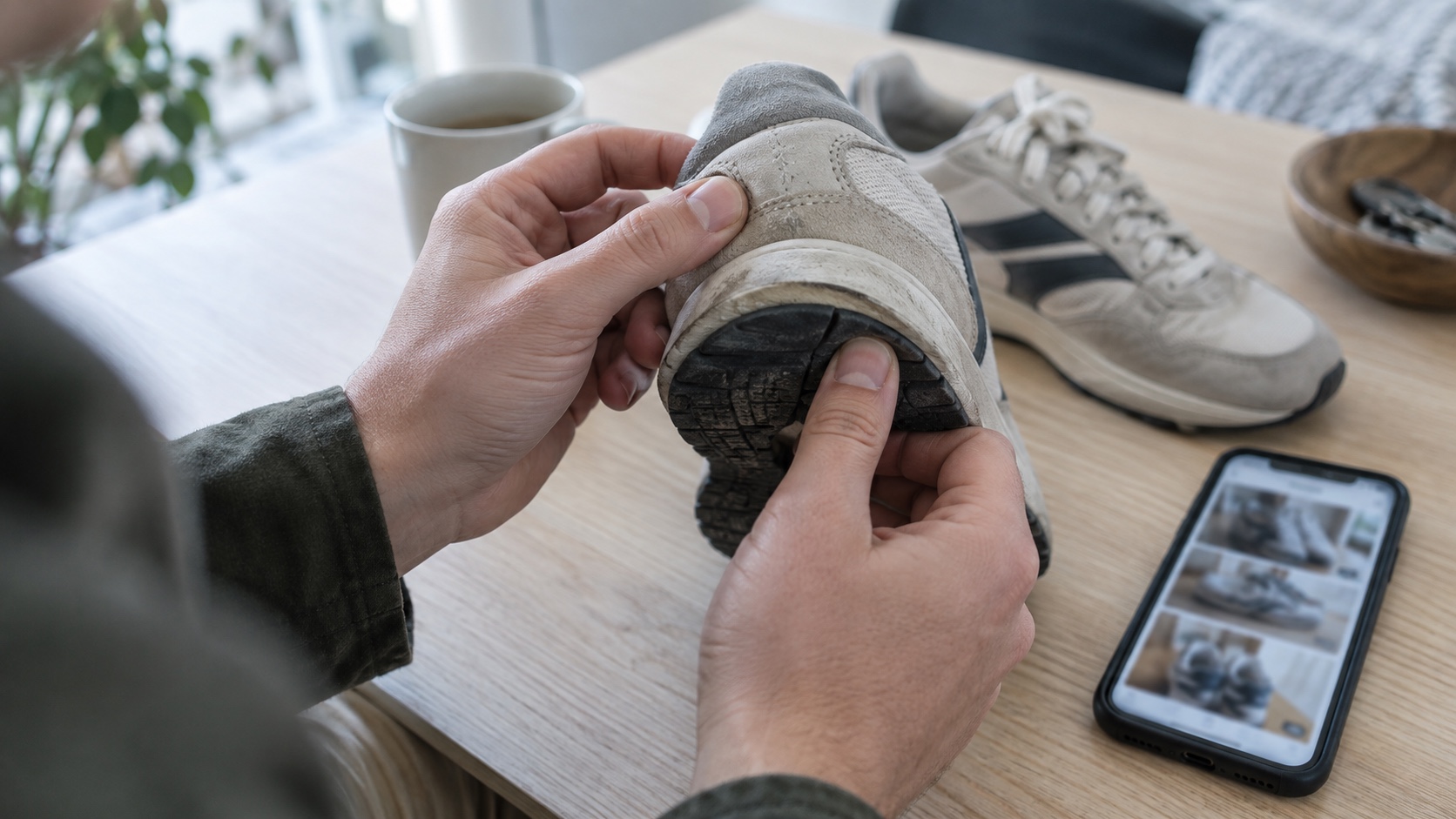
Vinted asks sellers to describe flaws and show them in photos. A photo missing the sole is not proof of deception; the seller may simply have forgotten it. Send a short, precise request: "Could you add a photo of both soles and the size label in daylight?" A useful reply resolves a concrete uncertainty. A vague assurance such as "perfect condition" does not show you whether the heel is worn down.
Compare the description with the images as well. "New without tags" alongside a visible stain deserves an explanation. "Very good" alongside cracked material may still be a poor fit for what you intend to pay. For a fuller item-by-item pass, use the Vinted condition checklist. A condition filter saves browsing time, but it cannot replace looking closely at the specific listing you plan to buy.
Is the price for the whole set?
A photo with several books, toys, or clothes can mean different things. It might be a single set sold together, a seller showing options, or an invitation to message for individual prices. The first image alone does not settle which items checkout will include. Read the title and description for an exact count and a list of included pieces. If the listing says "message for price" while showing one low price, do not assume that low price covers everything pictured.

Vinted's guidance for selling multiple items as a set says a set listing should make clear what is being sold and that the price should reflect all included items. Vinted separately lets buyers create a bundle from multiple individual listings. Those are different purchase shapes. Before paying, ask the seller to name the included items in the listing or conversation, and check the checkout summary against that answer.
An example: a picture shows twelve books, the description names three titles, and checkout shows one listing at a low price. Treat the three named titles as the only supported contents until the seller clarifies. If the seller insists you arrange a different purchase outside Vinted, leave it. Vinted's buying basics advise keeping communication and payment on the platform. The buyer protection and fees guide explains why the final checkout amount and on-platform purchase matter.
How do you verify a listing before paying?
Start with the details that would make you regret the purchase if they were wrong. A specific model number matters more than the seller's enthusiasm. A garment's measurements matter more than a generic size label when fit is uncertain. For a set, the contents matter more than the number of objects in the lead photo.
Ask one question at a time so the answer is usable. "Is the pair in the photos the exact pair you will send?" is clearer than "Is everything okay?" For a jacket, request a tape measure across the chest and down the back. For a console, ask what is included and whether the pictured controllers work. A seller may have a perfectly good item and still need to add one photo or one sentence. Clear questions give honest sellers an easy path to clarify.
Check the total cost before deciding. The item price in the grid is not the full amount you pay; shipping and the buyer-facing fee appear in checkout. If a listing only works as a bargain when you ignore those costs, it is not a bargain for you. This matters even more when a low headline price is used beside a crowded bundle photo.
Finally, look at the seller's reviews and their other listings for consistency, while keeping your judgement on the item in front of you. Which? recommends checking listing images, including using a reverse image search when a photo looks like stock imagery. A new seller with no reviews is not automatically dishonest; a copied-looking photo or an evasive answer is a reason to slow down.
A five-minute pre-purchase check
Open the full listing, not just the search card. Read the title and every line of the description. Check the selected brand, size, condition, and category against the photographs. Look for the view most likely to reveal wear or missing parts. For a set, count what is promised in writing. Then check the final checkout total and the seller's reply to any question you asked.
If one point remains uncertain, stop there and ask. You do not need a formal investigation for every used T-shirt. You do need enough evidence for the price and risk of the item. A low-cost paperback needs less checking than an expensive coat, but an unclear bundle price deserves clarification at either price. Take screenshots of the listing and the relevant messages when the condition or contents are important to the decision. They give you a record of what you saw at purchase time.
The decision can be simple: buy when the claims agree and the remaining uncertainty is acceptable, ask when one fact is missing, or leave when the seller cannot say what is being sold. An alert may get you to the listing early; it should give you time to make that decision, not pressure you to skip it. The Vinted alerts setup guide shows how to make searches more specific so fewer irrelevant results demand your attention.
If the item arrives different from the listing
Check the item promptly after delivery and compare it with the listing and your conversation. Photograph the problem, the item, and its packaging clearly. Do this before pressing "Everything is OK". Vinted's significantly not as described process says buyers have two days from its delivery notification to report an issue through the order; reporting suspends the transaction while the case is handled. The precise outcome depends on the claim and the evidence, so do not promise yourself an automatic refund.
If you bought a set and an item is missing, record which piece is absent and show the listing's original description. If the condition is worse, photograph the defect in clear light next to the relevant part of the listing. Vinted's refund policy distinguishes a significant mismatch from a minor difference and explains the available outcomes. Use the order's "I have an issue" flow rather than trying to resolve a disputed purchase through an unrelated payment or messaging channel.
You can also report a live listing that appears intentionally misleading. Vinted's reporting instructions list misleading photos, prices, condition, and size among the reasons to report, and explain where the report control sits. Report the specific discrepancy you can show. An uncertain photo or a seller's slow reply is not the same as evidence that the listing is deliberately false.
Keep useful alerts without amplifying noise
The Reddit complaint is a good reminder that speed and accuracy solve different problems. A fast notification helps you see a new listing while it is available. It does not certify the seller's condition claim, make a bundle price unambiguous, or replace a close look at the photos. Set a focused search, inspect the listing, and use the same short check each time before paying.
If broad searches keep surfacing the wrong items, refine the native filters first. InstantAlert can add reusable include and exclude word lists on eligible plans, then notify you when new results pass those filters. That helps reduce predictable search noise; it cannot verify what a seller will put in a parcel. InstantAlert's pricing page shows which plans include those filters. For the purchase itself, the final decision remains yours: know what the listing promises, know what checkout charges, and ask for the missing evidence before you buy.