
Last updated
Vinted's business has grown, but company growth does not tell you how quickly your jacket will sell or what margin you will make. The useful question is what each published figure measures, then what you still need to learn about your own category.
The cover and scene images are illustrations, not actual listings, product screenshots or transaction evidence.
This guide interprets company results and resale research. It does not rank “fastest-selling” brands: the sources below do not provide a current, representative Vinted sell-through dataset.
Read revenue, GMV and profit separately
Vinted's 2025 results, published on 9 April 2026 report EUR 10.8 billion in marketplace gross merchandise value (GMV), up 47% year on year. Group revenue was EUR 1.1 billion and net profit EUR 62 million. Those are three different measures.
| Measure | What it describes | What it cannot establish |
|---|---|---|
| Marketplace GMV | Value traded through the marketplace | The profit a seller keeps after costs |
| Group revenue | Revenue across Vinted's businesses | A typical member's earnings |
| Group net profit | The company's bottom line | Whether one sourcing niche is profitable |
The 2024 Group results report revenue of EUR 813.4 million, compared with EUR 596.3 million in 2023. The chart rounds those figures to whole millions; 2025 is reported at about EUR 1.1 billion.
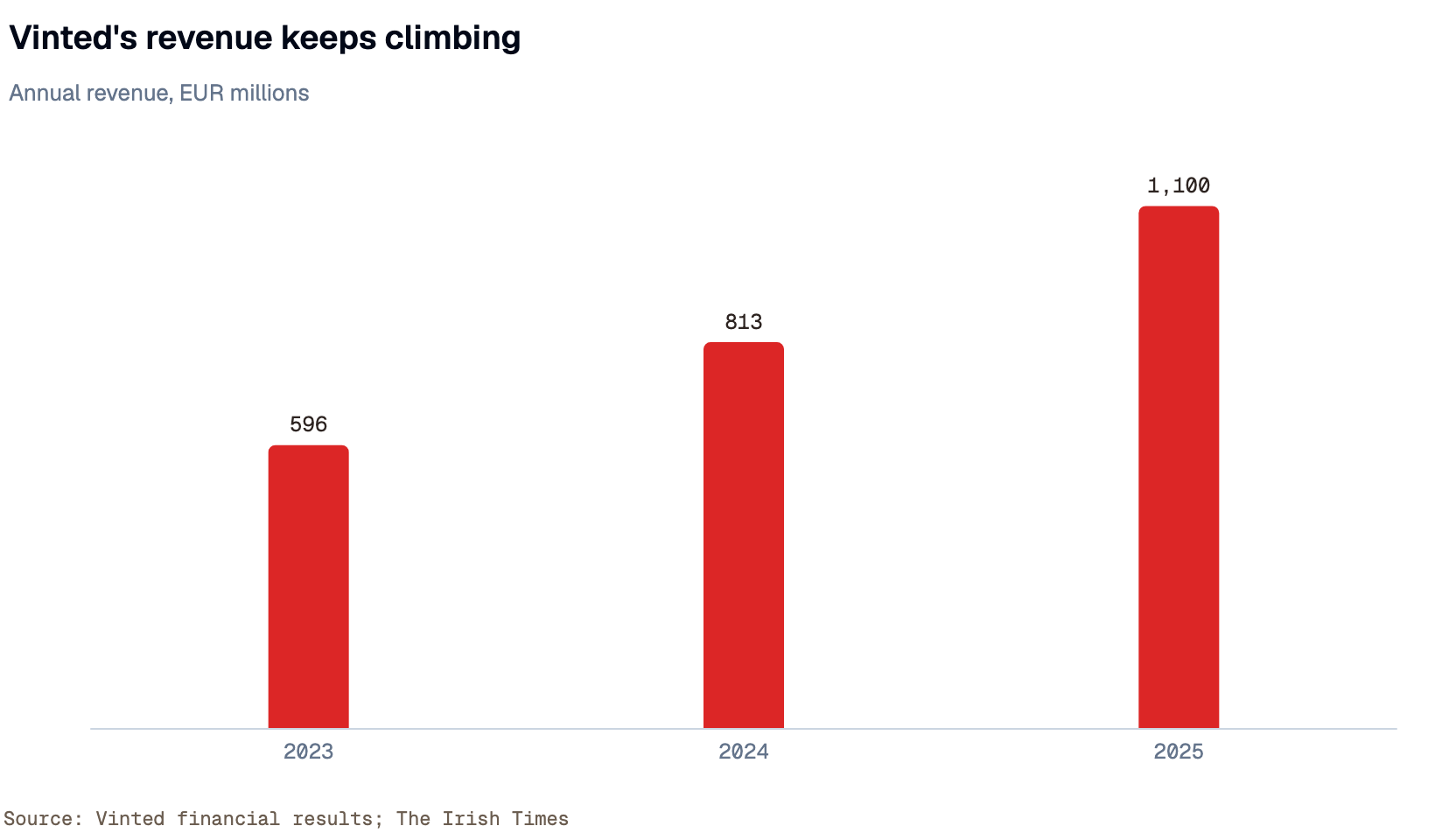
Net profit fell 19% in 2025. Vinted attributes the reduction to investment in Germany, categories, shipping and payments. That is the company's explanation, not evidence that every seller experienced either better or worse trading conditions.
The wider resale forecast has a different scope
The 2026 ThredUp report release, based on GlobalData research, says US second-hand apparel grew nearly four times faster than broader retail clothing in 2025. Its headline projects the global second-hand apparel market at USD 393 billion by 2030.
The US growth comparison is historical; the global dollar figure is a forecast. Neither measures Vinted-only sales, European sellers' margins or electronics resale. The research combines market modelling with sources including a survey of 3,268 US adults conducted in January and February 2026. ThredUp is itself a resale business, which is relevant context for its report.
Do not combine a US apparel growth rate, global forecast and Vinted Group revenue into one claim about how fast a particular item sells. Their populations, currencies and measures differ.
What would justify buying stock?
Use market growth as a reason to investigate a category, not as the reason to buy an item. Before sourcing, collect evidence close to the transaction you intend to make:
- Comparable items with the same model, condition and useful size range. Active asking prices show expectations; they do not prove completed-sale prices.
- Your full acquisition cost, including shipping, buyer-facing charges and any preparation.
- Your own completed-sale records, with accepted prices, markdowns, days held and losses. Unsold stock belongs in that record too.
- A downside case in which the sale is slower or the accepted price lower than hoped.

For example, a hypothetical item expected to sell for EUR 40 may look attractive at EUR 20. If inbound charges, preparation and selling costs add EUR 10, the expected cash contribution is only EUR 10 before tax and your time. A EUR 10 markdown uses all of it. This arithmetic says more about that purchase than a platform-wide growth percentage.
Use the margin-floor worksheet for the buying decision and the listing checklist for presentation. Those are separate tasks; neither can guarantee a sale.
Growth does not remove selling obligations
Buying stock to resell is different from clearing your own wardrobe. Check whether your activity and country require professional-seller registration under Vinted's Pro guidance, as well as local business and tax rules. Availability of a listing tool does not establish permission for every commercial activity.
For the UK, HMRC's online-platform income guidance distinguishes personal possessions from goods bought or made for profit. Its GBP 1,000 trading allowance concerns combined trading income before expenses for the tax year, not profit per marketplace. Personal possessions sold for more than GBP 6,000 can raise a separate Capital Gains Tax question, including relevant sets.
Platform reporting to HMRC does not itself mean tax is due. The UK's reporting rules began in January 2024; do not treat EU DAC7 rules or a platform's calendar-year report as a substitute for the UK tax calculation. Outside the UK, use your own tax authority's guidance.
Turn the headline into a testable decision
A useful sourcing note says: “These are the comparable items, this is the most I can pay, and this is what happens if the sale disappoints.” It does not say: “The market grew, so this will sell.”
InstantAlert is our search-monitoring product. It can help you notice new matching listings, but it cannot measure your future resale profit or promise first access. For that separate setup task, see how to configure an alert. Let the numbers for your own stock decide whether the search is worth continuing.