Last updated
Most Vinted listing mistakes have the same effect: they make the buyer fill in missing facts with risk. A grouped size without a label photo, one dark image, or "new" beside obvious wear does not merely look untidy. It makes the buyer wonder what else is wrong. The fix is a listing that proves fit, condition, and value before anyone has to ask.
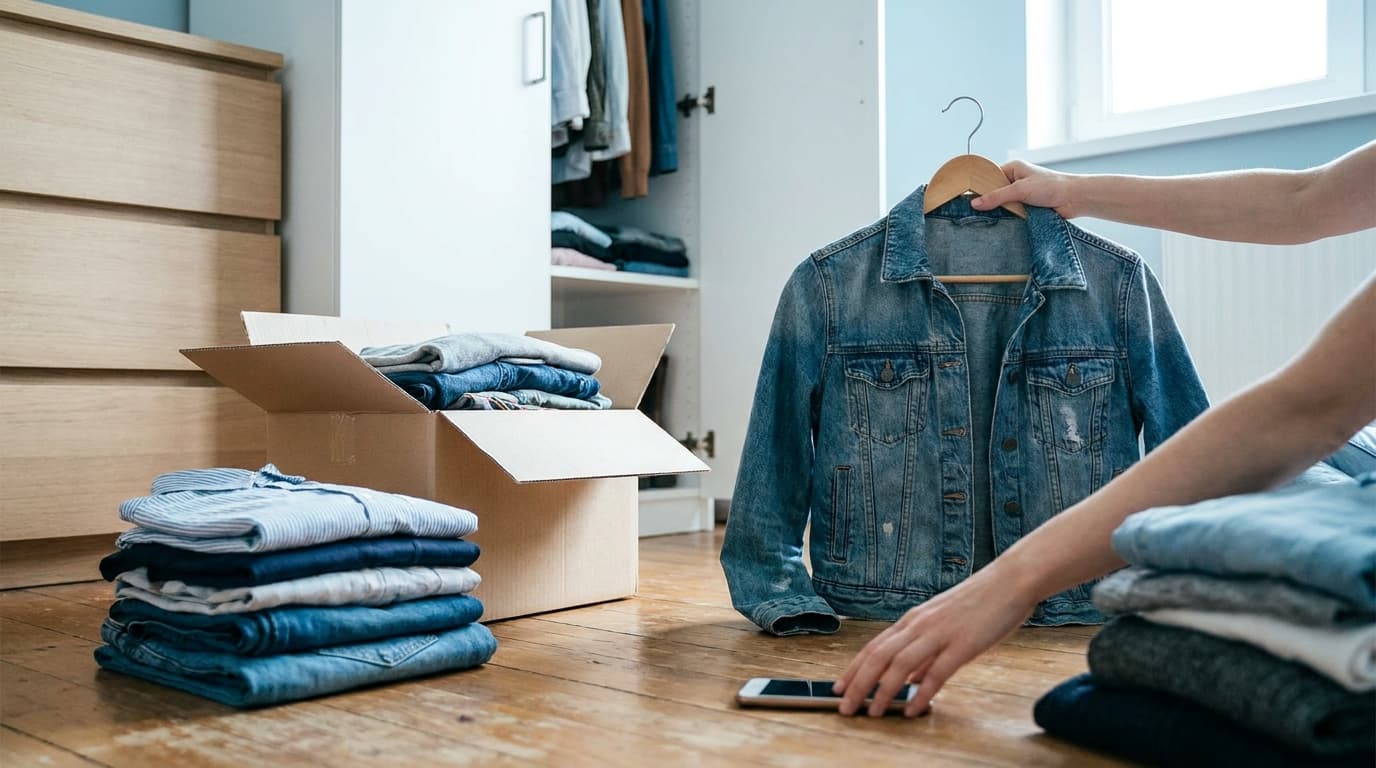
The cover and scene images are illustrations, not actual listings, product screenshots or transaction evidence.
In this post: The seller’s task | The 10 mistakes | Size proof | Useful photos | Honest condition | The final check
Make the listing answer the next buyer’s questions
This is a seller’s preparation workflow: write the listing so a buyer can identify the item, judge its condition and understand what will be sent. It is not evidence that every unsold item has a listing defect.
A clear listing may still be overpriced or have little demand. The checklist helps remove avoidable ambiguity before you decide whether price or sourcing needs attention.
Which Vinted listing mistakes break buyer trust fastest?
These ten avoidable gaps make a useful pre-publication check. They look different, but each leaves one part of the purchase open to an unpleasant surprise.
| Mistake | What the buyer cannot verify |
|---|---|
| 1. Only one photo | The back, label, details, and defects |
| 2. A dark or cluttered setting | True colour, cleanliness, and item edges |
| 3. No label or useful measurements | Tagged size and likely fit |
| 4. A vague title or description | Material, model, features, and alterations |
| 5. Contradictory size or condition details | Which part of the listing is true |
| 6. Hidden wear, stains, pilling, or odour | The real condition on arrival |
| 7. "New" for something already worn | Whether the item was used |
| 8. A price that ignores obvious retail value | Whether the deal still makes sense |
| 9. Pressure immediately after a favourite | Whether the seller will respect boundaries |
| 10. Silence after payment or during a problem | Whether the order will be handled |
Not every weak sale comes from this table. A clear listing can still be overpriced, out of season, common, or shown to the wrong buyers. But changing the price before checking the listing is often backwards. If the first photo is dark and the size is unclear, a discount only makes an uncertain item cheaper. The buyer-side guide to spotting misleading Vinted listings shows how people check those gaps before they pay.
Price also sits inside the buyer's final checkout total. A GBP 5 top can feel expensive after shipping and Buyer Protection are added, which is why the full checkout cost buyers see matters when you compare your price with other listings. You do not need to undercut every seller. You do need to give the buyer enough confidence that your item is worth the total.
How should you show size, labels, and measurements?
Start with the size printed on the item. Select the closest correct Vinted category, photograph the physical label, and repeat the tagged size in the description. If Vinted displays a grouped size, state the exact label without pretending that you can guarantee how the garment will fit another person.
Add flat measurements when fit is hard to judge, the brand runs inconsistently, or the item is pricey enough to justify the extra minute. For tops and jackets, pit to pit and back length usually answer the first questions. For trousers, show the waistband laid flat, rise, inside leg, and total length. Dresses may need pit to pit, waist, and length. Say whether a width is measured flat, since a 40 cm waistband is not an 80 cm circumference unless the reader doubles it.

Tagged size plus flat measurements give buyers two facts they can compare.
Put the numbers in the description as well as the photos. A tape measure image shows where you measured; text makes the number searchable and easy to copy. Vinted's description guidance specifically recommends measurements, materials, alterations, missing labels, and flaws. A description such as "Tagged UK 12. Pit to pit 49 cm, back length 62 cm, measured flat. Relaxed fit on the original owner" is more useful than "fits like a medium."
Do not relabel an item because it feels small to you. A seller can state the tag, measurements, stretch, and a personal fit note, but the tag and measurements are the facts. A buyer can still choose the wrong size or dislike the fit. Your job is to make the decision informed, not to promise an outcome you cannot control.
Photos buyers can judge without guessing
Your first photo should show the whole item, clearly separated from the background. After that, cover the back, size and care labels, fabric texture, fastenings, and every defect that could change the decision. For shoes and bags, include soles, corners, interiors, hardware, and serial or authenticity details where relevant.
Vinted's own photo checklist recommends a full-item first image, natural daylight, several angles, readable labels, and close-ups of defects. It also says to use your own photos rather than stock or watermarked images. Those rules are practical, not decorative. A catalogue image may show the original cut, but it does not show the condition of the item in your home.
The order of the photos helps:
- Full front view in daylight.
- Full back view.
- Size, brand, and care labels.
- Fabric, stitching, closures, or other useful details.
- Measurements shown at the points described in the text.
- Close-ups of every flaw, followed by one wider image showing where each flaw sits.

A full-item photo answers more than a tight crop or staged detail.
Clean does not mean clinical. A plain wall, door, hanger, mannequin, or tidy flat lay is enough. Avoid filters that shift colour, flash that hides texture, and a crop that cuts off hems or sleeves. If the item is cream but looks white in the image, say so and add a second daylight angle.
When does "new" stop meaning new?
Use the definitions offered for the item’s category and market. Labels are not identical everywhere: the current UK help page uses “New” and “Like new” as well as used-condition categories. Removing a tag alone does not prove an item was worn. Describe whether it has been used, washed, altered or damaged, and whether its tags or packaging remain.
Vinted's item-condition definitions warn that a buyer may cancel or return an item when its condition is significantly worse than described. The safest condition description is specific: "Very good. Light pilling under both arms, photographed. No holes or stains." That gives the buyer something they can compare with the images when the parcel arrives.

Condition checks are easier before the garment is folded or packed.
Cleanliness deserves the same honesty. Remove lint and surface dirt. Empty pockets. Wipe hard goods. Launder a garment when the care label and material make that sensible, but do not cover an odour with heavy perfume. Some buyers are fragrance-sensitive, and a strong scent can create a different problem. If a stored vintage piece has an odour you cannot remove safely, disclose it.
Condition proof protects the seller too. Keep the original listing photos until the order is complete, especially for higher-value items. If a later complaint conflicts with what you documented, saved listing evidence can support a factual reply or at least give support a factual record to assess. Good evidence does not make every dispute disappear, but it is better than trying to recreate the item after it has left your hands.
Why pushy messages and silence both lose buyers?
A favourite is not a promise to buy. People save items to compare prices, wait for payday, check measurements, or think about a colour. An immediate "I can ship today" or "Are you interested?" can turn that low-pressure research into a sales conversation the buyer did not request. Sending an offer through the platform is enough. If they want more information, they can ask.
After payment, the standard changes. The buyer has committed money and needs the order to move. You do not need to send a stream of updates, but one short message can help: thank them, give a realistic dispatch day, and correct it if your plan changes. Never promise a delivery day that belongs to the carrier.
Silence is most damaging when something goes wrong. If you miss the dispatch window, cannot find the item, or receive a return question, reply with the fact and the next action. "I cannot post today; I can post tomorrow morning" is useful. A long excuse is not. When a complaint arrives, keep the discussion inside Vinted and answer the issue rather than the buyer's tone.
A useful communication rule is: leave favourites alone. Once someone pays, send only the updates that change what they should expect.
Vinted listing mistakes: a 10-point pre-publish check
Before you publish, run one final check against the ten gaps covered above:
- The first photo shows the full item in clear daylight.
- Additional photos show the back, labels, details, and defects.
- The selected size matches the physical label as closely as Vinted allows.
- Useful flat measurements appear in both a photo and the description.
- The title names the brand, item type, colour, and useful model detail.
- The description states material, alterations, missing parts, and flaws.
- The condition label agrees with the photos and wording.
- The price still makes sense after the buyer's shipping and protection costs.
- No message plan depends on pressuring people who favourite the item.
- The item is ready to pack, and your dispatch promise is realistic.
This check takes time, so use it in proportion to the sale. A GBP 3 basic top may not deserve six measurements and 20 photos. It still needs an honest size, condition, full view, and visible defect. If the likely return does not justify even that minimum, decide whether the listing work is worth doing before it becomes another unfinished job.
For sourced stock, listing quality cannot repair a bad buy. A slow size, weak brand, or thin spread between buy and sale price remains a margin problem. Work through the listing first, then protect your margin before cutting the price. That order tells you whether the item needs clearer proof, a better price, or an honest exit.
Save the checklist somewhere close to your photo table. It is easier to catch a missing label image before the garment is folded, stored, or packed.
Finish the listing before changing the price
Pick one active listing and check whether its title, selected fields, description and photographs agree. Add the missing evidence, correct an optimistic condition label, or state exactly what is included. You are improving the information a buyer has, not promising a faster sale.
If that work is disproportionate to the likely proceeds, use the sell-or-donate decision. For stock bought to resell, the margin calculation is a separate check. Save this checklist near your photo table so the missing angle is caught while the item is still in front of you.