Last updated
The Vinted fee is the mandatory Buyer Protection charge shown at checkout under Vinted's current help guidance. It may help when an order never arrives, arrives damaged, or differs materially from its listing. It does not mean every complaint will be upheld. Rules and wording can differ by country and transaction. A fast alert should get you to a promising listing early, then leave you time to check it before you buy.
In this post: What the fee is | What Buyer Protection covers | Refund costs | The two-day deadline | Using alerts calmly
What is the Vinted fee?
People noticed the name because it appeared differently at checkout. A recent r/vintedUK discussion about the "Vinted Fee" label is a good reason to ask what changed. It is not proof that every buyer now sees the same text. Marketplace labels, currencies, and buying flows vary by market.
For the policy itself, start with Vinted's explanation of its Buyer Protection fee. Vinted describes it as a mandatory checkout charge that typically includes a fixed amount plus a percentage of the item or bundle price, although its calculation can vary. That public help page currently renders in US English, so the checkout shown for your own country is the number to follow. Shipping, taxes where they apply, and the item price all make up the final total.
That last screen can change whether a deal makes sense. A EUR 10 jacket that becomes EUR 16 after checkout might still be a fair buy. A EUR 10 jacket that becomes EUR 25 might not, even if the listing card looked tempting. Before I get attached to a listing, I judge the full Vinted checkout total rather than the item price alone. A low sticker price has a way of doing too much work in your head.
That total is easy to miss when you find a good item in a hurry. The item price is the most prominent number in search results, so it is natural to make your first decision around it. Slow down once you reach checkout and do the sum once. It takes seconds and makes comparing two similar listings much clearer.
The fee is not a tip to Vinted, and a seller cannot remove it with a message. It is part of an order placed through Vinted's system. If a seller asks you to use a bank transfer, PayPal Friends and Family, or another private payment route to avoid it, you leave the process that Buyer Protection depends on. Saving a few euros is a poor trade if the item never arrives.
Resellers have another reason to understand it. The fee belongs in your sourcing cost. If you pay EUR 24 after the Vinted fee and shipping, you bought a EUR 24 item. Calling it a EUR 17 item because that was the listing price only makes your later margin look better on paper.
What does Buyer Protection cover?
Vinted says Buyer Protection can apply when an item does not arrive, arrives damaged, or is significantly not as described. The platform sets out its wording in the cases Vinted says Buyer Protection covers. Those categories are a starting point. You still need to read the terms and order details that apply to your purchase.
The payment route matters. Buyer Protection applies to purchases made through Vinted's checkout, where the order, payment, messages, and reporting process are recorded. It is not a general guarantee for an item arranged in direct messages or paid for elsewhere. Keep conversations in the app too. The description, photos, and answers a seller gives before you buy can help show what you both agreed to.
It helps to separate a serious mismatch from the compromises that come with buying used. A coat with a large undisclosed tear is different from a coat whose shade does not suit your wardrobe. Boots sent in the wrong size are different from boots that feel tighter than you expected. Used items can have normal signs of wear. The listing description and photos are your reference point.
That is why the safest response to a suspicious request is usually to stay in the normal flow. The patterns in the red flags that should keep a purchase inside Vinted's normal checkout are worth knowing before a deal appears. When a price is unusually low and the seller asks you to pay or communicate elsewhere, pause. A listing can disappear in minutes. Losing money on it lasts longer.
Buyer Protection gives you a way to raise a problem, not an automatic verdict. Vinted may need photos, a description of what happened, and time to review the order. The seller may dispute your account of the condition. A clear claim with evidence is easier to assess than a rushed sentence written after the packaging has gone in the bin.
What happens when an item is significantly not as described?
If the item arrives with a real issue, do not confirm that everything is fine just to clear the notification. Open the order in the Vinted app and use the "I have an issue" route before the order completes. Explain the mismatch plainly, attach clear photos, and show what differs from the listing. Photograph a missing label, a damaged zip, a stain, or the wrong item itself. One broad photo and one close-up often say more than a long, angry paragraph.
Vinted's process may involve a response from the seller and a review of the evidence. Depending on the case and what both sides agree, the outcome may be a return, a partial refund, or a full refund. You cannot demand any of those in every case. A serious undisclosed flaw differs from changing your mind after trying on a correctly described item. Vinted's terms for the transaction control the result.
Keep the order in the state in which it arrived. Do not wash the item, remove tags, repair it, or throw away the mailer before photographing the issue and checking the in-app options. This is practical evidence management, not a trick to force a refund. It lets both sides see what was delivered.
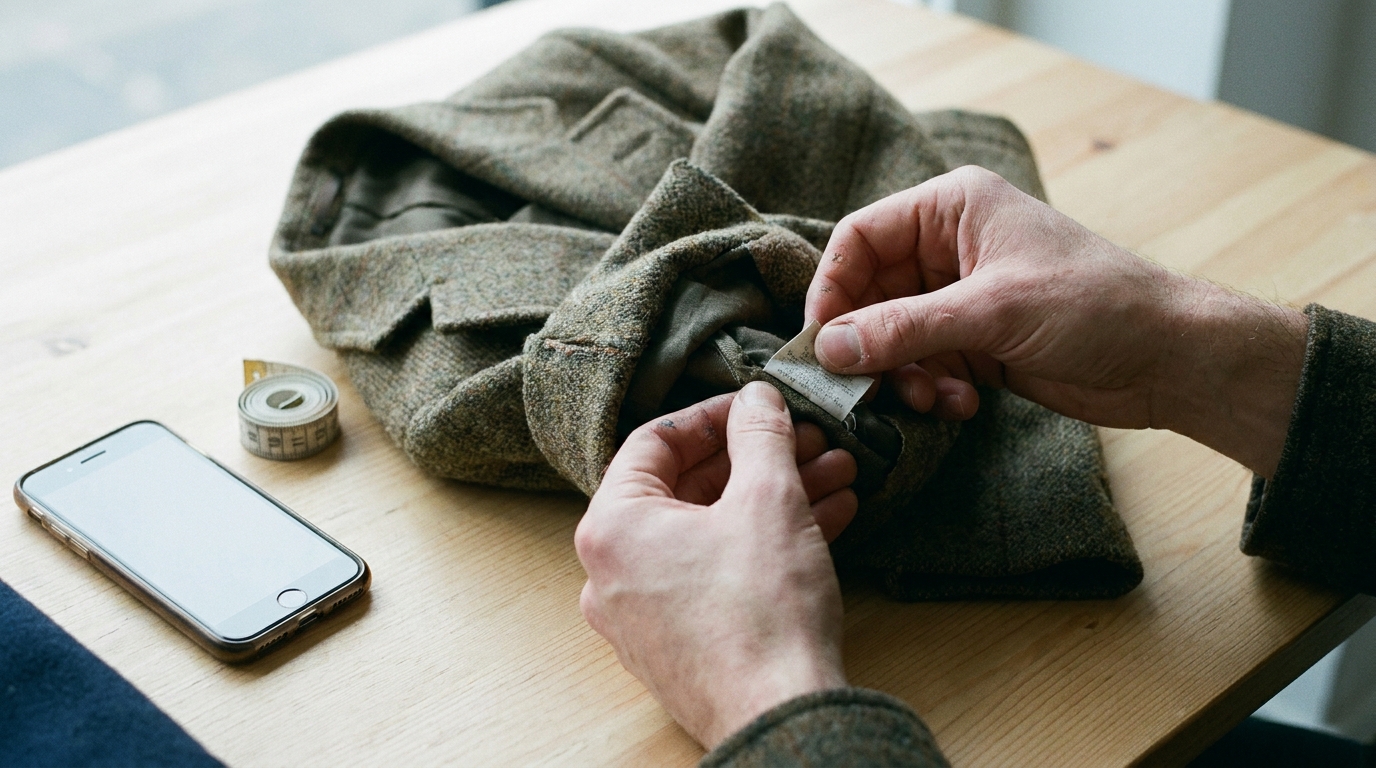
If delivery itself is part of the dispute, record the parcel as well as the contents. An empty or damaged package is harder to assess when there is no photo of the outer label, tape, or packaging condition. Why a clear parcel-and-item record matters when a dispute concerns delivery explains a sensible sequence without asking buyers to assume the worst.
There is a human side to this too. A seller may have missed a flaw, made an honest sizing mistake, or listed the wrong item during a busy evening. You can describe the problem firmly without accusing them of fraud. Keep the evidence factual, let the platform handle the decision, and reserve your strongest claims for what the photos show.
Which costs can you get back?
For an eligible claim, Vinted says a full refund can include the item price, initial shipping, the Buyer Protection fee, and taxes where they apply. Check Vinted refund-policy evidence requirements for the conditions that apply to your order. A refund can cover more than the number on the listing card, but the route and decision Vinted gives for the case still matter.
Return postage deserves extra attention. Vinted's public guidance says buyer-paid return shipping can be deducted from a refund, while a seller can choose to cover it. Do not assume every eligible complaint returns every shipping cost. Read the in-app instructions before sending an item back, especially if the platform asks you to use a particular label or delivery method.
This can feel fussy when the listing was inexpensive, but the arithmetic still matters. Say an item costs EUR 12, initial delivery costs EUR 4, and the checkout fee adds another amount. A full refund can cover more than EUR 12. If you later pay for the return and the seller does not cover that route, the amount you receive may reflect the return cost. Let the screen for your own order settle that question, rather than a comment thread or a rule copied from another country.
The same thinking helps before a purchase. How shipping changes the all-in price of a Vinted find is useful when you are deciding whether the item still makes sense after delivery and checkout costs. If the full price already feels uncomfortable, Buyer Protection is not a reason to stretch your budget. It is there for a problem, not to make a weak buy safer.
For sellers, a clear description is the best way to avoid these arguments. Photograph wear, add measurements where they matter, and mention repairs. That will not stop every dispute, but it gives the buyer a realistic picture before they pay. It also gives you something concrete to point to if they later say the item was unexpected.
The two-day deadline: get your evidence ready
The habit is simple: inspect an order before marking it as received, compare it with the listing, photograph anything that does not match, and report an issue in the app within Vinted's stated two-calendar-day window when you need to. Good documentation does not guarantee a successful claim. Check the deadline and instructions shown on your own order, because terms and transaction flows can change.
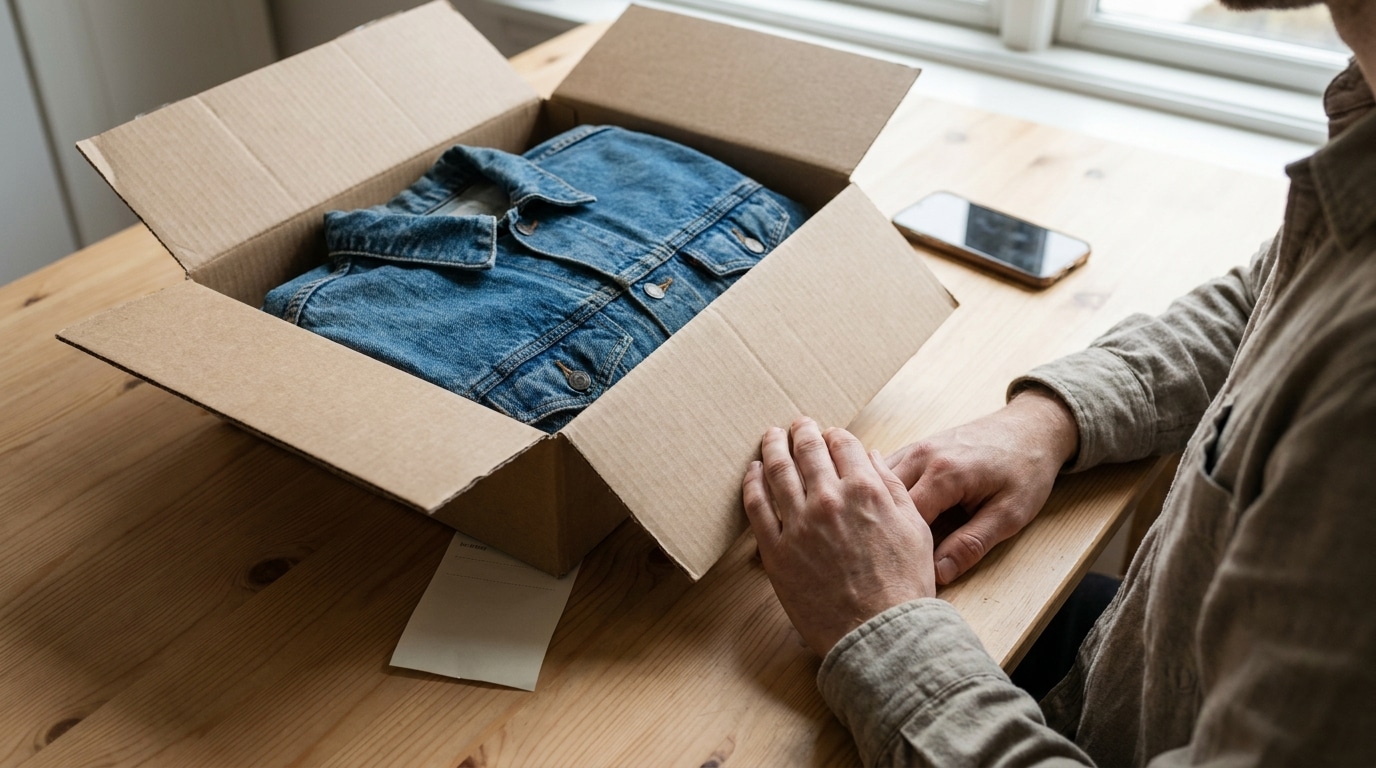
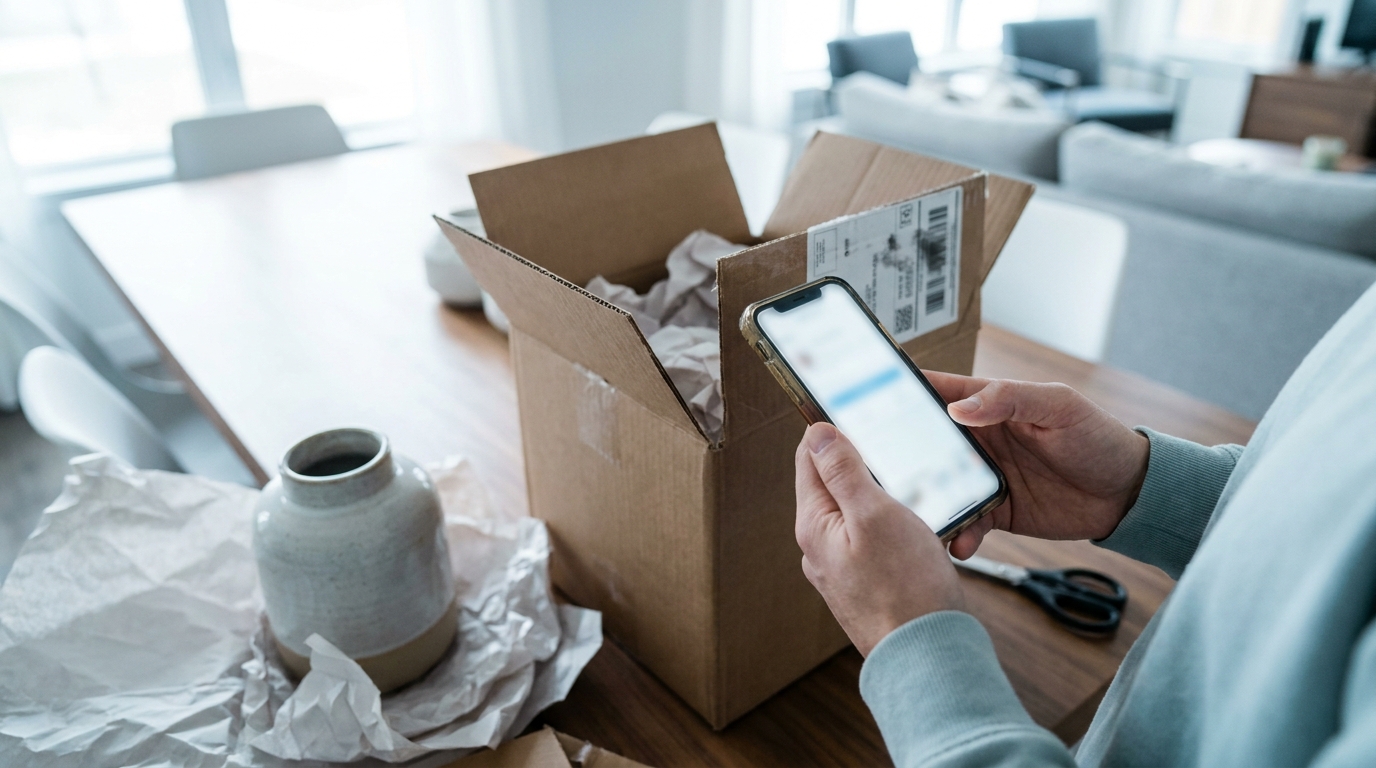
Start with the parcel before opening it. Photograph the shipping label and any dents, tears, wet patches, or retaped seams. Then photograph the item in daylight if you can. Put the listing photos beside the delivered item and compare the details that mattered when you bought it: brand label, size label, material, condition, included parts, and obvious flaws. If an item was meant to be black but arrives navy, a photo beside the listing screenshot says more than a vague complaint.
There is a wider reason to take the checkout wording seriously. In 2024, the European Commission's Vinted fee-transparency action described work by EU/EEA consumer authorities on clearer information about fees and refunds. This is regulatory context, not personal legal advice or a promise that every order will have the same outcome. Buyers should be able to see charges and the steps for a problem before they commit to an order.
Do not wait until the last hour to work out what the issue is. If the listing said "excellent condition" and you find a hole, note where it is, take a photo that shows its position, and use the order flow. If the problem is minor or you realise the listing mentioned it, you can make a calmer decision. The deadline is short enough that an arrival-day check is far easier than reconstructing the facts two days later.
Let a fast alert buy you time, not rush you
A good alert does not make a decision for you. It gives you an earlier look at a listing that matches the filters you set. With InstantAlert, you can open a tightly filtered new listing sooner and use the first minute for a quick safety check: read the description, scan the photos, check the seller's history, and look at the full checkout total.
InstantAlert cannot verify authenticity, fit, condition, a seller's intent, or a refund outcome. It cannot know whether a photo hides a flaw or whether a size will work for you. That is why I prefer a short pause after an alert arrives. A listing may be popular, but being first to see it is different from being pushed into buying it.
When a listing appears, the aim is not to rush through checkout. It is to have the chance to make the same sensible checks you would make on a quieter day. That habit still makes an alert useful when the answer is to leave the listing alone.
Build your search around an item you would be happy to buy, then build a Vinted alert that gets you to relevant listings sooner. Use the brand, category, size, condition, price ceiling, and words that matter to you. A narrow alert makes the review faster because you are not sorting through listings you would never choose.
Before you tap Buy, ask yourself a few questions. Is the item shown clearly? Does the description match the photos? Is the seller asking you to leave Vinted? Does the final price still work after delivery and the Vinted fee? If any answer feels wrong, letting one listing go is usually cheaper than arguing about it later.
If you want more than one filtered search running at once, look at the plans that give you the right amount of alert coverage. Pick coverage that fits how you source, keep payments in Vinted, and use the time an alert gives you to make the purchase you want.